

My dad used to tell me to get back on the horse. I always did. What I couldn’t explain to him was that I kept landing in the same place: capable, trying hard, and somehow unable to make the way I worked fit the life I wanted.
For years, I thought the answer was to try harder. It took me much longer to ask whether I was trying to solve the wrong problem.
I wasn’t short on ambition
I earned a music scholarship to study violin, then gave it back when I couldn’t keep up with the workload. I was nearly deployed with the Peace Corps twice and withdrew both times. Later, I passed on graduate programs because I was afraid I couldn’t sustain the work I’d need to repay the loans.
From the outside, those decisions could look like a lack of follow-through. From the inside, I was watching opportunities I wanted become impossible to manage, without knowing why.
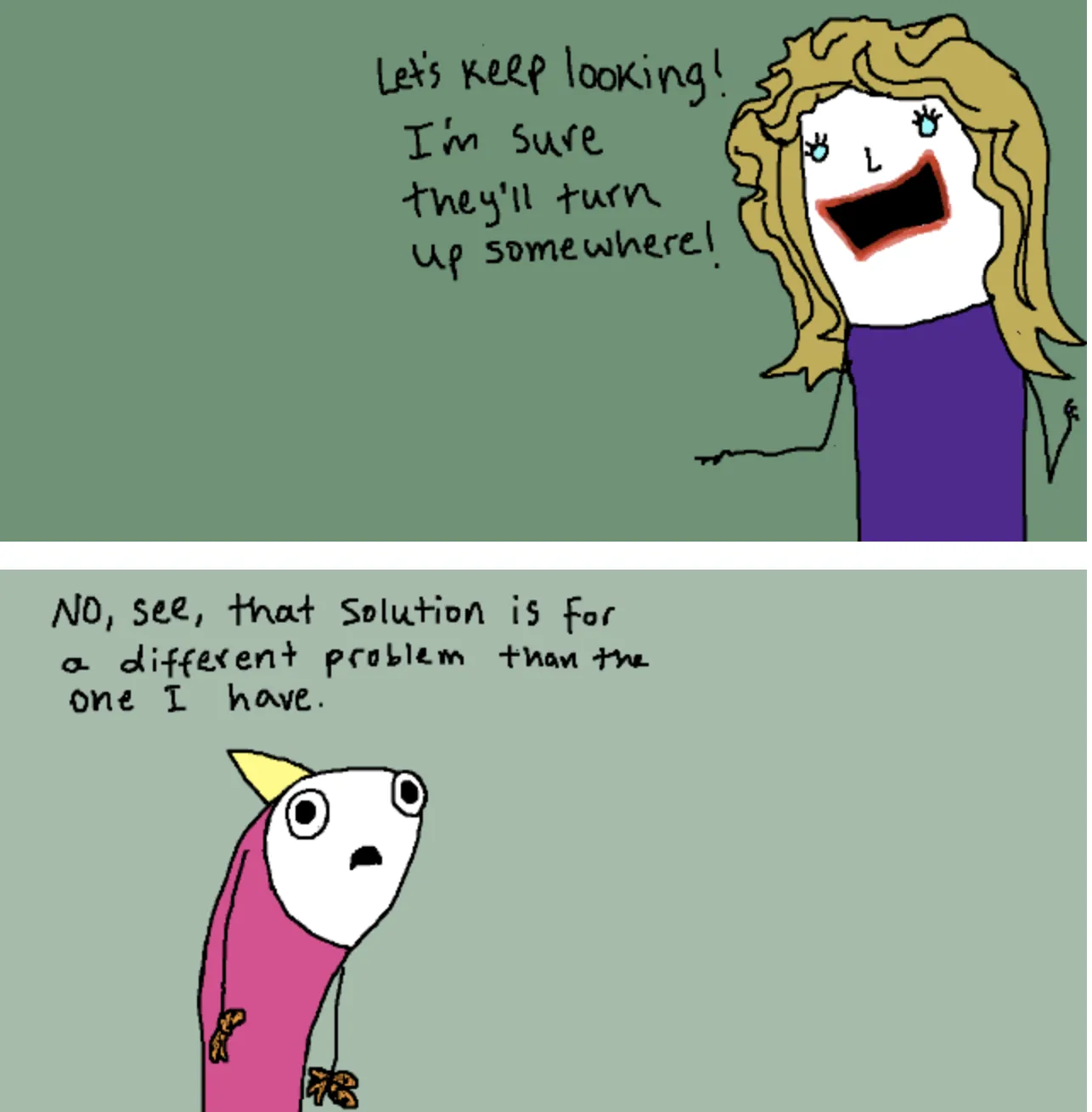
I was diagnosed with inattentive ADD at 33. I had begun looking for answers after finding webcomics that described the maddening experience of being offered a solution to a problem you don’t actually have. That was familiar. I didn’t need another reminder to care, or another lecture about effort.
I needed to understand what was happening.
From Hyperbole and a Half


The cost of not knowing
Before my diagnosis, I carried a quiet sense of failure from one job and decision to the next. A breaking point came in Seattle, where I was working two and a half jobs for $15 an hour. When my boss fired me, she said she had to worry about the quality of my work.
I remember that sentence. I also remember how determined I was to get evaluated afterward.
The diagnosis didn’t make everything easy. It gave me a better question. Instead of Why can’t I make myself work like everyone else? I could ask, What kind of structure helps me work well?
I began building systems around that question. I wanted freedom, but I also needed enough structure to move forward without treating every difficult week as a verdict on who I was.
Freedom needed a structure, too
Remote gig work eventually let me spend a year living in the woods, study herbs, and move to Mexico with my cat, Juju. I loved the freedom. I had also taken on a new kind of uncertainty: my income depended on work I had to find, pace, and manage myself.
I wanted to build a life here and pursue residency. That gave my earnings a real purpose. But without a regular paycheck, I couldn’t easily tell what I needed to make in a week, what portion belonged to taxes and other goals, or when I could close my laptop and be done for the day.

So I gave the week a number
I started with a calculator. I entered what I needed my income to cover and worked backward to a weekly target. Then I gave each week its own beginning and end: one relay at a time.
That changed the question from Am I doing enough? to What am I working toward this week? I could see my progress without asking my brain to hold the whole year at once. I still decided when to work and when to stop, but I had numbers to help me make those decisions.

Within three months of using the system, I had saved enough to take a vacation without working a single day. I was in El Zonte, genuinely unplugged. That mattered to me more than a perfect streak or a productivity score.
The system became Payday Relay. It’s a way to turn the life you’re trying to fund into a weekly number, track what you earn, and make room for things that are easy to postpone when work has no natural stopping point.
You can start with your own number
Maybe you know when you want to close your laptop but aren’t sure what your work needs to earn. Maybe the workday keeps stretching because you can’t tell when you’ve done enough. Both are real starting points.
You don’t have to work the way I do. That’s the point. Start with your own numbers and see what a workable week might look like for you.
I still think about my dad’s advice. I did get back up, many times. Eventually, I learned I was allowed to build a different way forward.